
- Don’t tax me, don’t tax thee, tax the man behind the tree
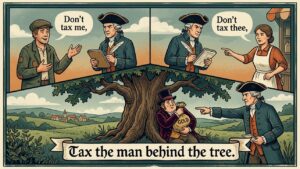 How Virginia’s fiscal system redistributes in all the wrong ways American political debates about taxes and public services are often framed as a choice between two competing visions. One emphasizes progressive taxation and redistribution, with the goal of ensuring that those with greater means contribute more to support shared public services. The other emphasizes limited… Read more: Don’t tax me, don’t tax thee, tax the man behind the tree
 - Virginia’s fiscal system: the “hellish version” of a state-local tax system
 There is an old European joke about how the continent might be organized. In an ideal Europe, the British are the police, the Germans are the engineers, the French are the chefs, the Italians are the lovers, and the Swiss organize everything. In Europe’s version of hell, the Germans are the police, the French are… Read more: Virginia’s fiscal system: the “hellish version” of a state-local tax system
 - Making invisible government funding flows visible in Virginia: Why the analysis of intergovernmental finance matters
 Most Virginians have a clear sense of how much they pay in taxes. Income taxes appear on pay stubs, property taxes arrive as local bills, and fees are paid directly for public services. Many of the services financed by these revenues—schools, public safety, transportation, and local amenities—are also visible in daily life. What remains largely… Read more: Making invisible government funding flows visible in Virginia: Why the analysis of intergovernmental finance matters
 - Has the United States entered an era of authoritarian federalism?
 Or have we simply forgotten how federalism is supposed to work? For the past 250 years, federalism has been at the heart of the American experiment. By dividing authority among national, state, and local governments, the United States was designed to balance unity with diversity, prevent the concentration of power, and create multiple arenas for… Read more: Has the United States entered an era of authoritarian federalism?
 - Is it better to give than receive? Exploring the distributional dimension of Virginia’s budget
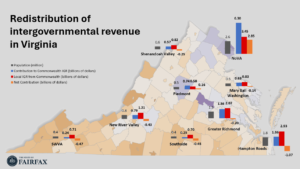 Who pays and who benefits? A new statewide study reveals Virginia’s intergovernmental Balance of Payments A new analysis in the 2025 State of the Commonwealth report released today by Old Dominion University’s Dragas Center for Economic Analysis and Policy takes a hard look at a question that is rarely discussed openly in Virginia politics: who… Read more: Is it better to give than receive? Exploring the distributional dimension of Virginia’s budget
 - A Fairfax Economist’s Wish List for 2026
 Most people’s wish lists in the run-up to the New Year include things like losing weight, better health, planning a long-delayed vacation, or spending more time with family and friends. That’s probably how it should be. But economists—and especially public finance economists in places like Fairfax County—tend to see the world a little differently. Collectively,… Read more: A Fairfax Economist’s Wish List for 2026
 - Do wealthy people in Virginia pay their fair share in taxes?
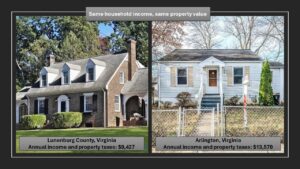 A recent analysis commissioned by Fairfax County revealed that taxpayers in Fairfax County on average contribute twice as much in taxes to the Commonwealth as they get back in state services, infrastructure funding, and grants. One of the obvious reasons for this finding is that households in Fairfax are, on average, wealthier than an average… Read more: Do wealthy people in Virginia pay their fair share in taxes?
 - Is Virginia really the biggest “Taker State” in the United States?
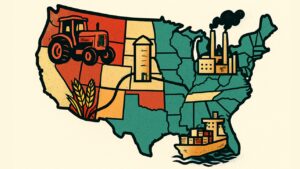 For years, the Rockefeller Institute of Government’s annual Balance of Payments (BOP) report has shaped a powerful narrative about Virginia’s relationship with the federal government. According to the Rockefeller Institute’s calculations, the Old Dominion sits at the very top of the list of so-called “taker states,” receiving far more in federal spending than it contributes… Read more: Is Virginia really the biggest “Taker State” in the United States?
 - Fairfax County sends more to Richmond than it gets back — and the numbers are starker than most realize
 During the November 25, 2025 meeting of the Fairfax County Board of Supervisors Economic Initiatives Committee, economists from the Weldon Cooper Center for Public Service presented a detailed Revenues and Returns Analysis—a comprehensive assessment of how much Fairfax County contributes to the Commonwealth’s General Fund and how much it receives in return. The findings confirm… Read more: Fairfax County sends more to Richmond than it gets back — and the numbers are starker than most realize
 - An in-depth analysis of the public education funding formula in Virginia (Part 2)
 This is Part 2 in a three-part series providing an in-depth analysis of the public education funding formula in Virginia. (Start at Part 1 or skip to Part 3). Context for Part 2 In 2021, Virginia’s General Assembly recognized that its so-called Standards of Quality funding formula–the funding formula used to fund quality education in… Read more: An in-depth analysis of the public education funding formula in Virginia (Part 2)
 - An in-depth analysis of the public education funding formula in Virginia (Part 1)One of the most important public policy issues in Virginia is public education. Public schools in the Commonwealth educate over 1.25 millions every (school) day. As the primary pathway to opportunity, Virginia’s public education system shapes whether children from different parts of the Commonwealth—urban, rural, or suburban—can reach their potential and participate fully in society,… Read more: An in-depth analysis of the public education funding formula in Virginia (Part 1)
- An in-depth analysis of the public education funding formula in Virginia (Part 3)This is final part of a three-part in-depth analysis of the public education funding formula in Virginia. (Find Part 1 and Part 2 here) SOQ Reform in Virginia: Where Do We Go From Here? This is Part 3 in a three-part series providing an in-depth analysis of the public education funding formula in Virginia. Part… Read more: An in-depth analysis of the public education funding formula in Virginia (Part 3)
- Lessons from analyzing local and intergovernmental finances in Fairfax and Virginia over the past six months
 The State of Fairfax was set up in April 2025–six months ago–to share the lessons from rigorous, evidence-based analysis about ‘the state of Fairfax’ and the state of the Commonwealth. What are some of the key takeaways from the analyses that have been produced so far? Lesson 1. Local variations in cost-of-living are often ignored,… Read more: Lessons from analyzing local and intergovernmental finances in Fairfax and Virginia over the past six months
 - Loudoun County’s negative Balance of Payment with Richmond
 For over a quarter of a century, the radio journalist Kojo Nnamdi has been a fixture in the DMV. While The Kojo Nnamdi Show aired its final episode in 2021, Kojo continues to host The Politics Hour with Kojo Nnamdi each Friday with resident analyst Tom Sherwood, maintaining a vital forum for the public to… Read more: Loudoun County’s negative Balance of Payment with Richmond
 - Inflation has hit 10% per hour: the price of a burrito bowl and the unequal cost of living in Virginia
 Economists spend considerable time and energy dissecting broad macroeconomic trends—tracking whether prices are rising nationally by three percent or five percent, or whether taxes are too high, or whether interest rates are nudging them up or down. But in the process, they often overlook something just as important for households: the variation in cost of… Read more: Inflation has hit 10% per hour: the price of a burrito bowl and the unequal cost of living in Virginia
 - An evidence-based evaluation of the efficiency of Fairfax County Public Schools
 The Virginia House of Delegates is the oldest continuous English-speaking representative legislative assembly in the Western Hemisphere. Late last month, the Sully District Council of Citizens Associations hosted its Eleventh Biennial State Legislative Candidates Night, providing an opportunity for citizens of Fairfax County’s Sully District to ask questions of the candidates seeking to be elected… Read more: An evidence-based evaluation of the efficiency of Fairfax County Public Schools
 - Virginia’s Comparative Report of Local Government Revenues and Expenditures: Missing Data for FY 2024
 The Virginia Auditor of Public Accounts annually prepares a Comparative Report of Local Government Revenues and Expenditures for all local government ins the Commonwealth, in accordance with § 15.2-2510 of the Code of Virginia. This report intends to provide the General Assembly and governing bodies and officers of Virginia’s cities, counties, and towns (as well… Read more: Virginia’s Comparative Report of Local Government Revenues and Expenditures: Missing Data for FY 2024
 - Fairfax County’s Balance of Payments with Richmond: A Policy Perspective
 Each year, Fairfax County residents contribute substantially to the Commonwealth of Virginia through state taxes. These contributions fund a wide array of services, from education and health to transportation and public safety, spread across the state. Yet when we examine the flow of resources more closely—specifically, how much Fairfax taxpayers send to Richmond compared to… Read more: Fairfax County’s Balance of Payments with Richmond: A Policy Perspective
 - The State of Fairfax: Insights from a Candidate’s Forum for the Virginia House of Delegates
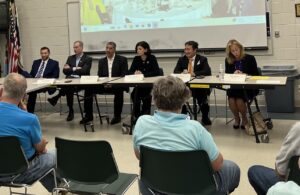 On September 24, 2025, the Sully District Council of Citizens Associations hosted the Sully District Council’s Eleventh Biennial State Legislative Candidates Night. The in-person participants in the candidate forum included the Republican Candidate for Virginia’s 7th Delegate District, Cassandra Aucoin; the candidates for the 9th Delegate District, incumbent Delegate Karrie Delaney (Democrat) and Republican Candidate… Read more: The State of Fairfax: Insights from a Candidate’s Forum for the Virginia House of Delegates
 - Exploring Virginia Through An Economic Lens
 We are used to looking at the world through a geographic lens. For instance, we use maps to show the land area of each locality in Virginia, its geographic features, and distances between different locations. While maps showing the geography of the commonwealth certainly have their benefits, when better trying to understand the state’s economic… Read more: Exploring Virginia Through An Economic Lens
 - Why real teacher salaries matter more than nominal ones: a closer look at teacher salaries in Virginia
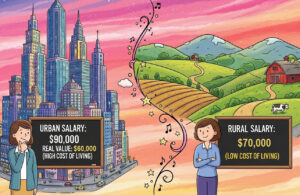 When it comes to evaluating teacher compensation, numbers can be deceiving. A salary of $70,000 in one Virginia school division might seem generous—until you realize that in another locality, the same amount barely covers rent. That’s the difference between nominal and real salary, and it’s a distinction that matters deeply for educators, policymakers, and communities… Read more: Why real teacher salaries matter more than nominal ones: a closer look at teacher salaries in Virginia
 - Local revenue autonomy as an enabler of economic development in Virginia
 Why do cities and local governments in the United States proactively promote local economic development? It is tempting to answer this question simply with “because this is their job”. But reality is more complex. Cities and local governments in the United States proactively promote local economic development because they have political and fiscal incentives to… Read more: Local revenue autonomy as an enabler of economic development in Virginia
 - Funding public roads in Virginia: how a greater local role could unlock land-value financing
 “Location, location, location.” As any good real estate agent will tell you, a property’s location significantly impacts its value and desirability, sometimes even more than its physical characteristics. For example, two identical properties, one with good road access, and another without, will be valued very differently. The direct relationship between local road access and property… Read more: Funding public roads in Virginia: how a greater local role could unlock land-value financing
 - The economic health of the commonwealth: what does the data say?
 According to a recent Virginia Public Media report, Virginia Gov. Glenn Youngkin and General Assembly Democrats painted divergent pictures of the future health of Virginia’s economy and finances at dueling presentations last month. While the VPM report presented two opposing political perspectives, and made some references to a state-level economic forecast prepared by the University… Read more: The economic health of the commonwealth: what does the data say?